Infusing Festive Energy: 60 Texture-Based Mardi Gras Backgrounds
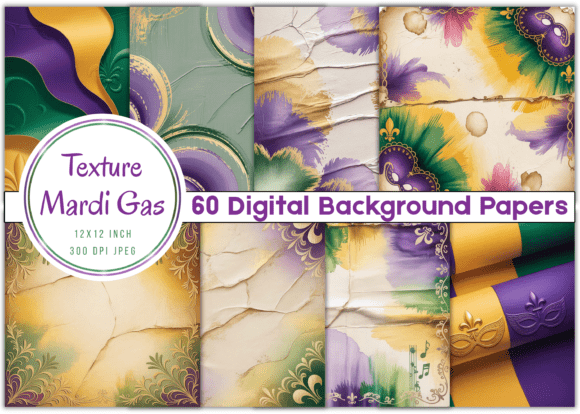
There is a specific energy to Mardi Gras that is difficult to capture without the right visual elements. It is not just about the purple, green, and gold; it is about the texture, the grit, and the layers of celebration. If you have been looking for 60 Texture-based Mardi Gras Backgrounds to elevate your creative work, you are likely seeking that perfect balance between festive flair and professional polish. This collection offers exactly that: a robust suite of digital assets designed to bring the spirit of the carnival to your projects without requiring hours of manual editing.
When you work with this bundle, you are receiving more than just colorful images. The package includes 60 Digital Backgrounds in high-quality JPG File Format. Each file is sized at 12 x 12 Inches with a resolution of 300 DPI and dimensions of 3600 x 3600 Pixels. This specification is crucial for professionals because it ensures these are high-quality, print-ready files. Whether you are designing a small social media icon or a large-format poster, the clarity remains intact. Furthermore, the designs are seamless and repeatable, allowing you to scale them to any size—such as a trade show booth or a full-page magazine spread—without worrying about visible tiling or pixelation.
The Visual Character of Texture-Based Design
Why choose texture-based backgrounds over flat vector graphics? The answer lies in psychology and visual hierarchy. Flat colors can sometimes feel sterile or corporate. Texture, on the other hand, adds depth and tactile quality to digital work. These backgrounds mimic the look of painted canvas, distressed surfaces, and layered artistic media. This style introduces a sense of history and authenticity to your design. It suggests that the piece has a story to tell.
The personality of this collection is bold and celebratory. You will find abstract brush strokes, bokeh effects that mimic city lights, and intricate patterns reminiscent of wrought-iron balconies. These elements function as a versatile design asset library. For a brand identity project, using these textures can help a brand appear more grounded and connected to culture. For editorial design, they provide a rich backdrop that makes white text or typography pop off the page. The visual weight of these backgrounds allows them to support heavy typography, making them an ideal partner for display font or serif font headers.
Strategic Applications for Designers and Marketers
As a creative professional, your time is valuable. You need assets that work across multiple platforms. These backgrounds are not limited to one specific niche; they are adaptable tools for web design, packaging design, and physical products.
Consider the following practical applications for the 60 Texture-based Mardi Gras Backgrounds:
- Social Media Graphics: The 12x12 inch square format is perfect for Instagram and Pinterest. Use them as base layers for quote graphics, sale announcements, or event invitations. The texture adds a premium feel that stops the scroll.
- Invitations and Stationery: For crafters and hobbyists, these files are print-ready. You can use them as the background for digital invitations or print them onto cardstock for physical party invites.
- Website Hero Images: In web design, a textured background can add warmth to a landing page. Pair a subtle texture with a clean sans serif font to maintain readability while keeping the visual interest high.
- Packaging and Merchandise: If you are an entrepreneur selling themed merchandise, these textures can be applied to tote bags, t-shirts, or product boxes. The seamless and repeatable nature of the files ensures the pattern looks continuous on physical goods.
- Digital Publishing: Bloggers and publishers can use these as chapter headers or sidebars in digital PDFs and e-books to break up text monotony.
Integrating Typography and Visual Hierarchy
A background is only as good as the content it supports. When using the 60 Texture-based Mardi Gras Backgrounds, you must pay close attention to font pairing and readability. Because these textures are rich and detailed, they demand a typographic style that can stand up to the visual noise.
A bold display font or a heavy geometric sans serif font usually works best for headlines. These typefaces have enough visual mass to remain legible over a busy, textured background. If you are working on a logo design, ensure the mark is simple enough to remain distinct against the intricate patterns of the background. Avoid using thin, light-weight fonts for body copy directly on top of the texture; instead, use the texture as a focal point and place your text in a cleaner area or use a semi-transparent overlay to create separation.
The "feel" of the typography should match the "feel" of the texture. A gritty, distressed texture pairs well with a handwritten font or a script font that has some irregularity. This combination creates a cohesive, hand-crafted aesthetic. Conversely, if you want to create a modern, high-fashion look, pairing a sleek, modern typography style with a rich, abstract Mardi Gras texture creates a sophisticated contrast. This approach is excellent for brand perception, signaling that a brand is both creative and professional.
Evaluating Quality and Commercial Fit
Before incorporating any asset into a commercial project, you must evaluate the quality and the licensing. The specifications of this collection—Resolution: 300 DPI and Dimensions: 3600 x 3600 Pixels—are the industry standard for professional print work. This means you do not need to worry about the images looking blurry on a printed flyer or a business card.
When selecting which of the 60 backgrounds to use, test them in context. Do not just look at the file in isolation. Place your specific brand colors and typography over the texture to see how they interact. Check for "visual vibration," where complementary colors (like bright green and purple) sit next to each other and cause eye strain. If the background is too high-contrast, it might compete with your message.
For commercial use, these assets offer significant value. They can be used in products for sale, such as planners, scrapbooks, or digital templates. They serve as a cost-effective way to expand your library of design assets without hiring a photographer or illustrator to create custom textures. By using these premium textures, you can maintain a consistent visual language across your marketing materials, ensuring that your seasonal campaigns look polished and cohesive.
Ultimately, the goal of using these 60 Texture-based Mardi Gras Backgrounds is to save time while raising the production value of your work. Whether you are a small business owner planning a seasonal promotion or a content creator looking for fresh visuals, this collection provides the high-resolution, versatile foundation you need to create something memorable.